
economics of religion · Development · Political Economy
Alejandro de Luque
PhD Candidate in Economics, Universidad Carlos III de Madrid
I am a second-year PhD candidate in Economics at Universidad Carlos III de Madrid. My research sits at the intersection of the Economics of Religion and Development Economics, and asks why the effectiveness of public policy varies so much across communities. My work explores the idea that much of the answer lies in culture, and in the religious and social institutions that underpin these communities.
Research
Working paper
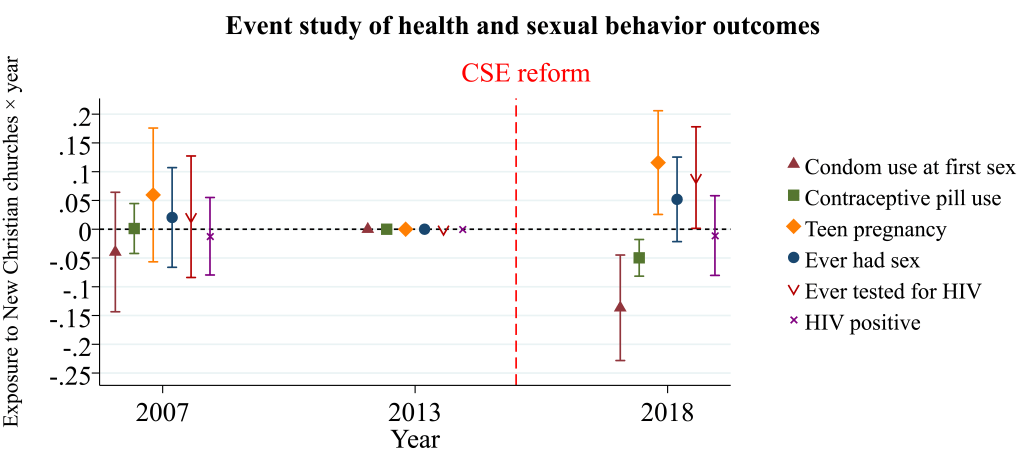
Religious Backlash to Sexuality Education: Evidence from Zambia
With Daniela Solá
Abstract
Teaching
Universidad Carlos III de Madrid
Spring 2027
- Applied Economics — with Warn N. Lekfuangfu
Autumn 2026
- Applied Economics — with Daniel Rees & Jan Stuhler
Spring 2026
- Applied Economics † — with Julio Cáceres
- Economics of Education †— with Jesús Carro
Spring 2024
- Industrial Organization† — with Natalia Fabra
† Teaching Excellence Acknowledgements awarded by students in these subjects
Contact
📍 Office 15.1.12, Calle Madrid 126, 28903 Getafe, Spain.
 Alejandro de Luque